CNC Machined Parts
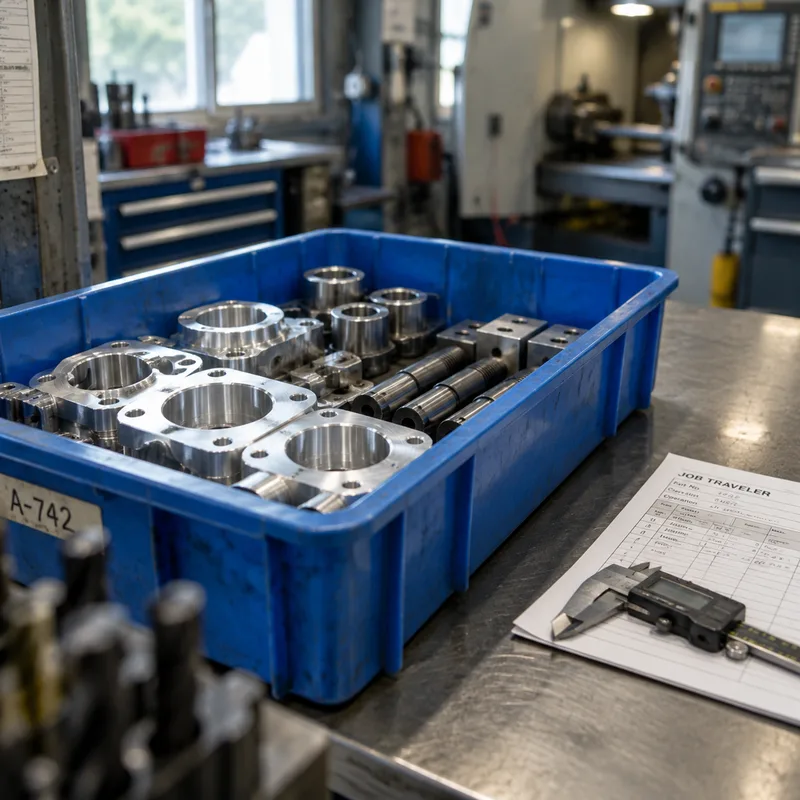
The families below cover the subtractive processes in this catalog: milling, turning and 5-axis machining remove material with cutting tools, while EDM erodes electrically conductive material with sparks — a common route for sharp internal corners, thin walls and hardened alloys that cutters struggle with.
19 product families
Sheet Metal Parts
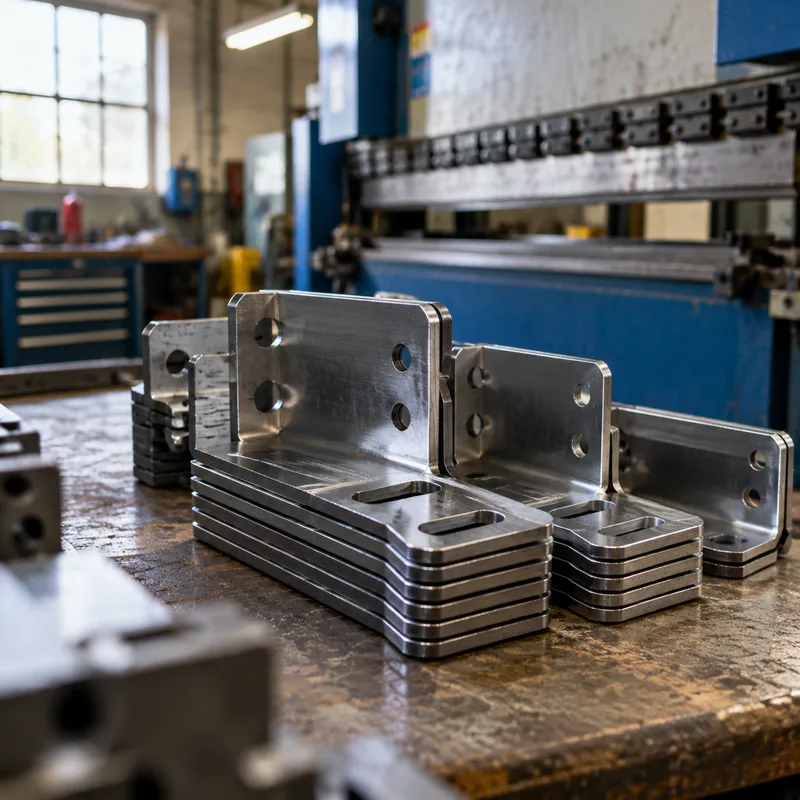
Every family here starts from flat sheet; what differs is how the part is cut, formed and joined. Laser cutting profiles sheet without tooling, bending folds it into 3D shells, stamping and punching form features under a press with dedicated tooling, and weldment services join cut and formed pieces into larger structures.
6 product families
Die Casting Parts
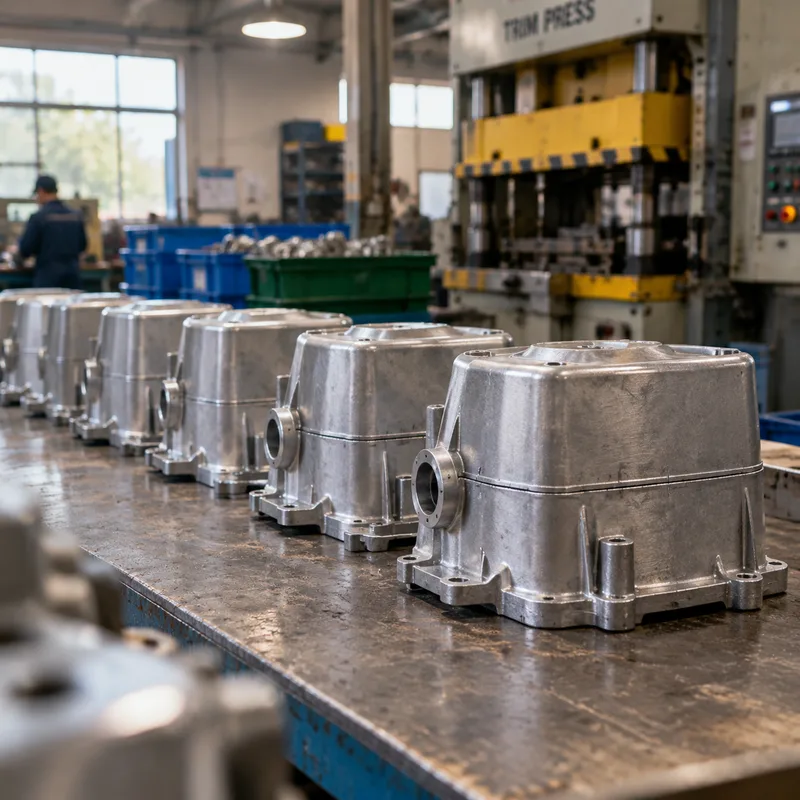
The two families here differ by the alloy they shoot into the mold. Aluminum die casting (A360, A380, ADC12 and related alloys) suits structural housings, brackets and heat-dissipating parts; zinc die casting (Zamak 2/3/5, ZA-8, ZA-27) fills fine detail in a hot-chamber machine, which is why it dominates small, precise hardware — locks, gears, connectors and decorative shells.
2 product families
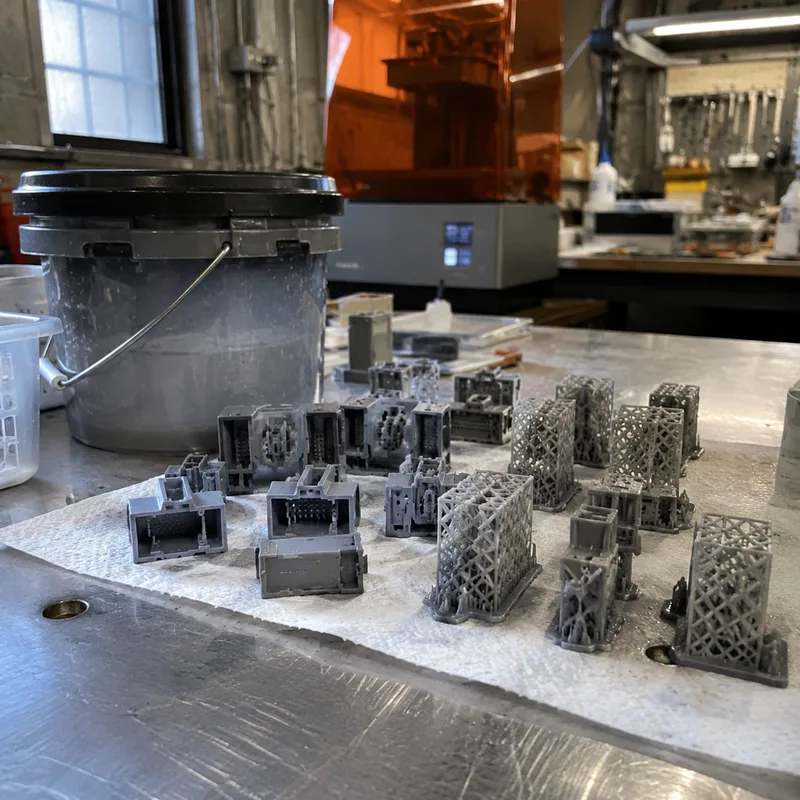
3D Printing Parts
The printing families differ by feedstock: SLA cures liquid photopolymer resin, SLS fuses nylon powder, DMLS fuses metal powder, MJF fuses polymer with an absorbing agent, and FDM extrudes thermoplastic filament. That choice sets surface quality, mechanical behavior and the geometry each process tolerates.
5 product families
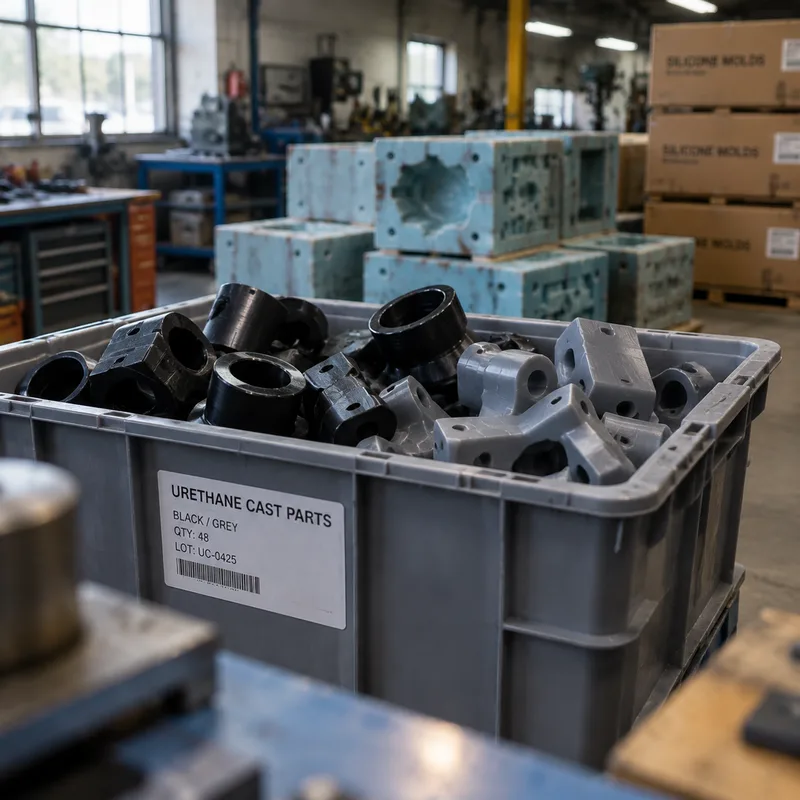
Urethane Casting Parts
Urethane casting is generally selected for low-volume parts that need molded geometry and a material feel closer to a production polymer than a typical machined prototype. A master pattern is used to create a silicone mold, and liquid polyurethane is cast and cured in that mold.
1 product family
CNC Machined Parts
Product family
CNC Machining Service
High-volume CNC machined prototypes and production parts in days, with tolerances down to sub +/- 0.001" and a wide range of metals and plastics.
Product family
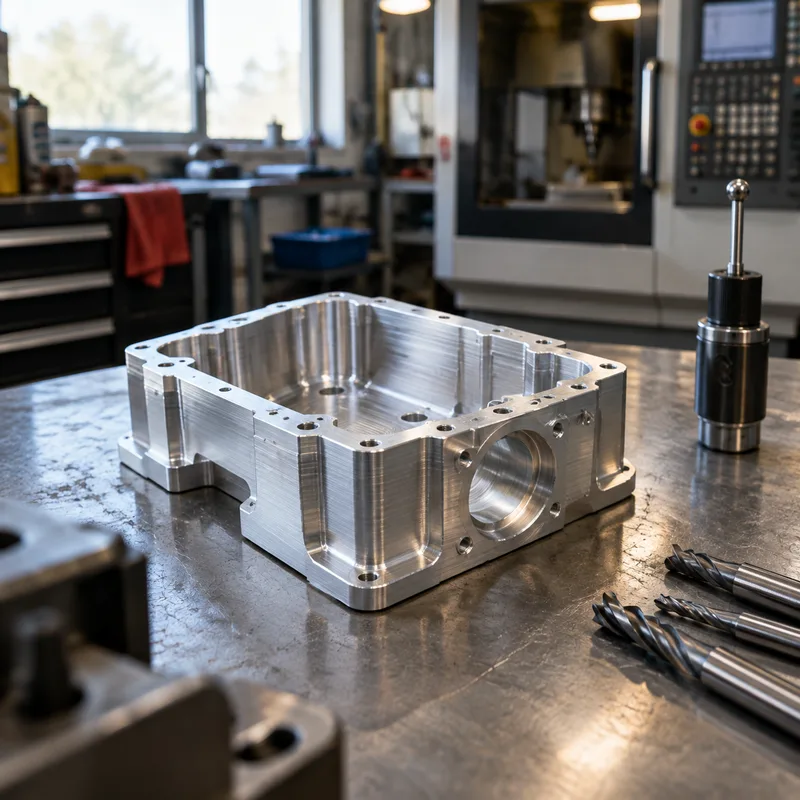
CNC Milling
CNC milling is a precision machining technique that uses rotating cutting tools to shape workpieces into finished products, accommodating a wide range of materials such as metals, polymers, wood, and glass. Advanced 5-axis systems allow intricate geometries to be produced without multiple machine setups.
Product family
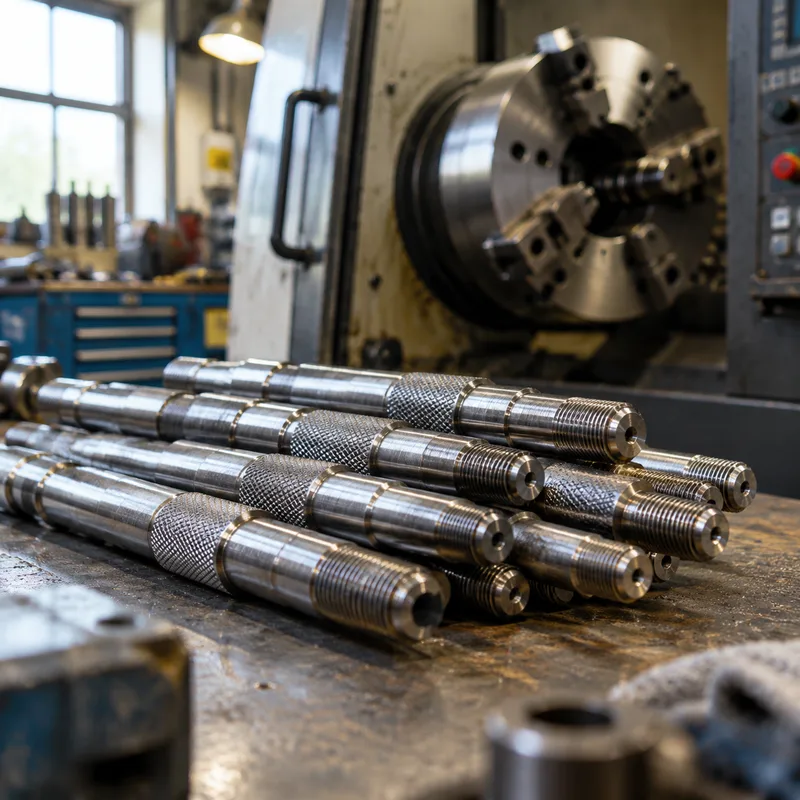
CNC Turning
CNC turning is a machining process where the workpiece rotates while stationary cutting tools shape it, ideal for cylindrical parts. It achieves tight tolerances and excellent surface finishes, with capabilities ranging from basic 2-axis lathes to advanced 5-axis mill-turn centers.
Product family
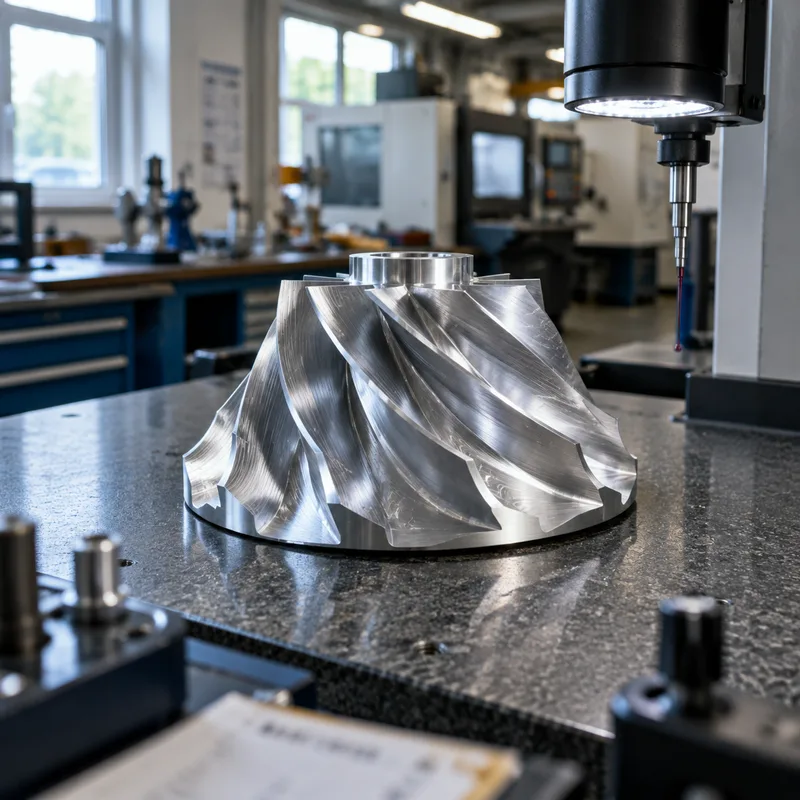
5-Axis CNC Machining
5-axis CNC machining produces high-precision prototypes and production parts with tight tolerances and complex geometries. Services support metals and plastics with fast lead times and a range of finishing options.
Product family
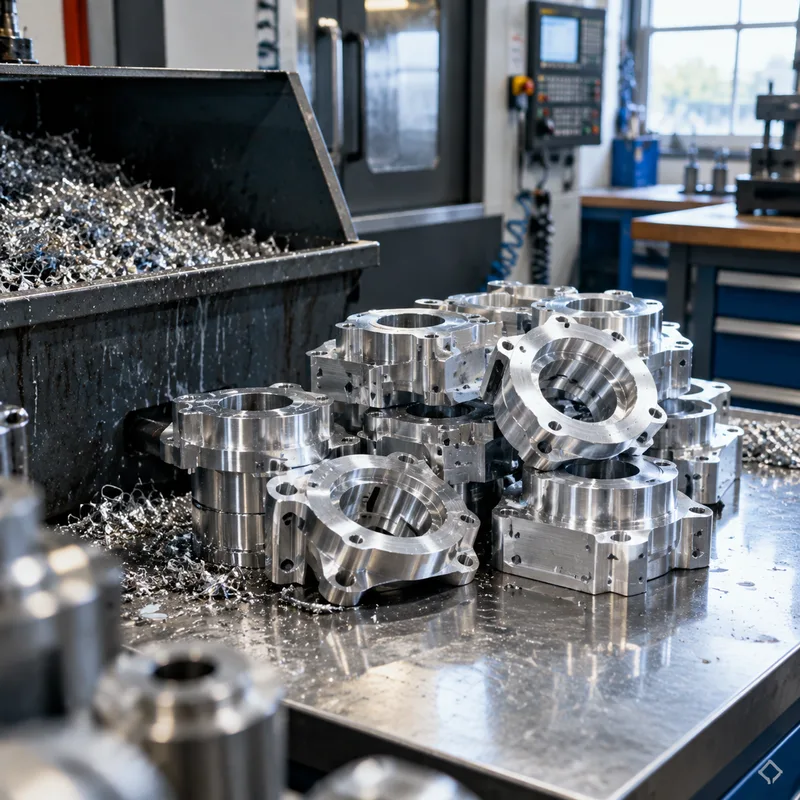
Aluminum CNC Machining
CNC machining service for aluminum alloys, offering milling and turning with tight tolerances and a range of surface finishes. Aluminum machines three to five times faster than steel, making it cost-effective for prototypes through production.
Product family
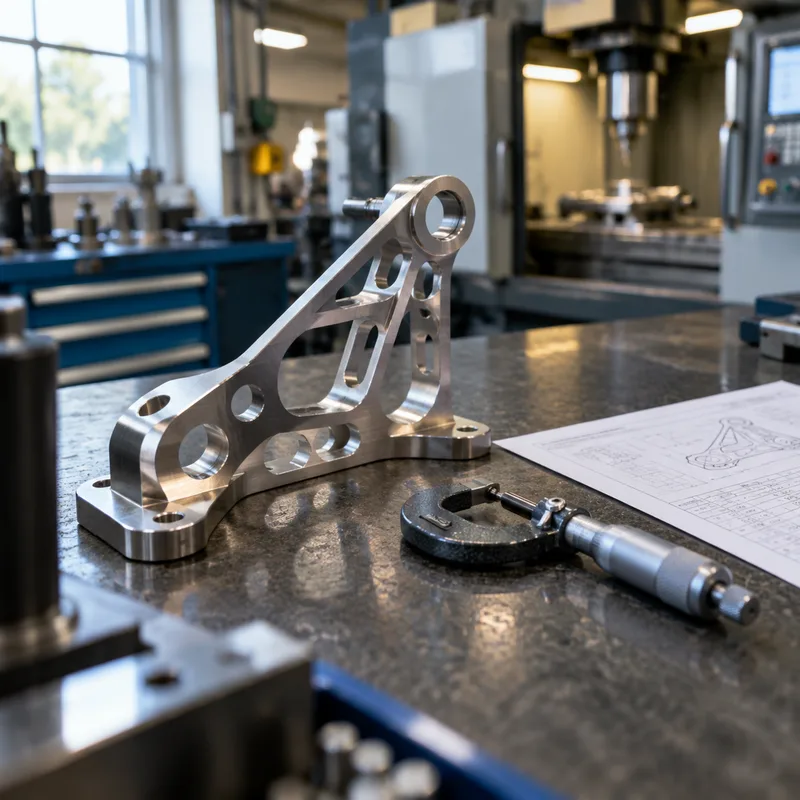
Aerospace CNC Machining
CNC machining service for aerospace and defense components using simultaneous 5-axis milling and turning centers to produce complex geometries such as turbine blades, impellers, and structural parts. Holds tight tolerances with superior surface finish on compound curves and undercuts.
Product family
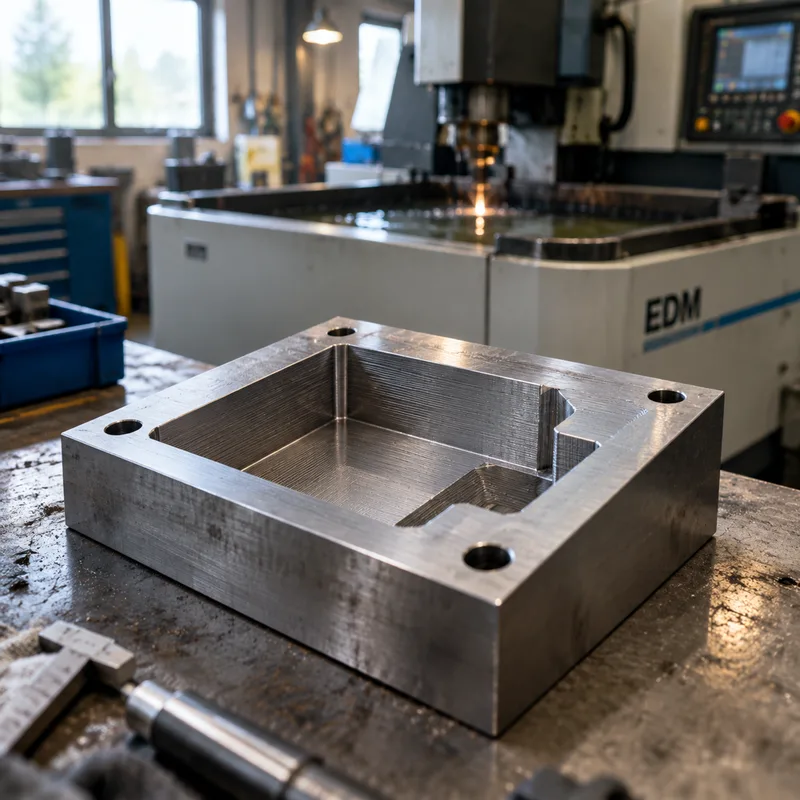
EDM Machining
Electrical Discharge Machining uses electrical sparks to erode conductive material in a dielectric fluid, enabling precise machining of complex shapes and hard materials. It covers both conventional/sinker EDM and wire EDM processes.
Product family
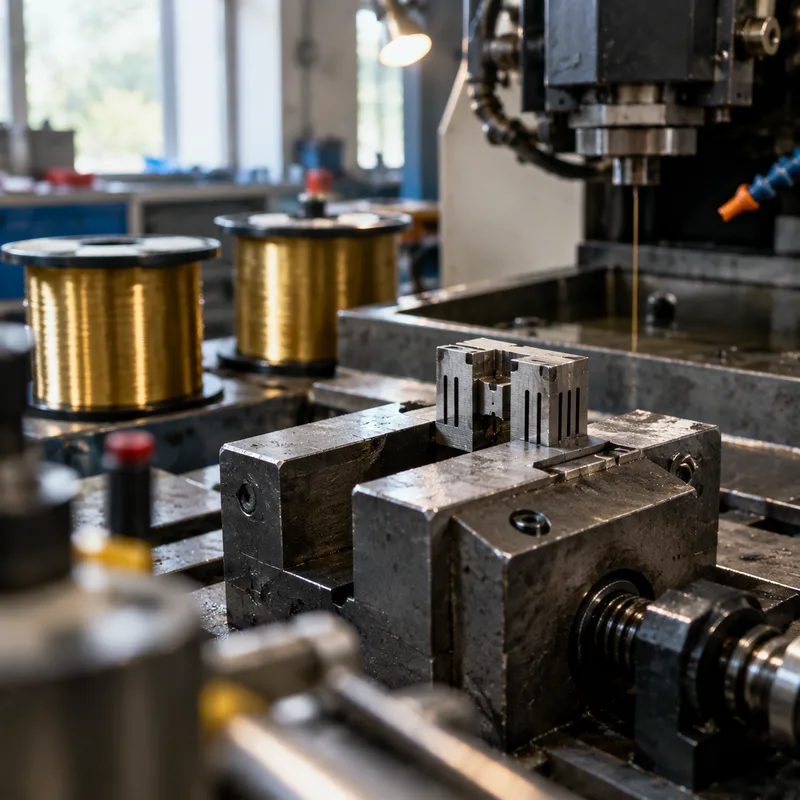
Wire EDM
Wire electrical discharge machining service that uses a continuously fed wire electrode to cut conductive materials, capable of tight tolerances, fine surface finishes, and complex geometries. Suitable for hard conductive materials such as carbides and graphite.
Product family
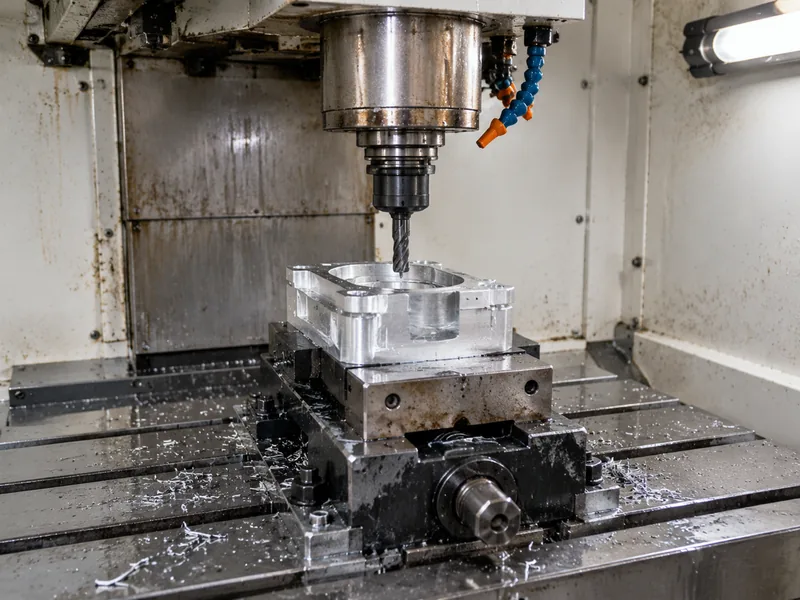
Sinker EDM
Sinker (ram) EDM burns a custom-shaped electrode into conductive workpieces to produce blind cavities, mold details and complex 3D forms that through-cutting wire EDM cannot reach. No cutting forces act on the part, so deep cavities and thin features hold geometry in hardened steel, tungsten and carbide. Catalog tolerance evidence runs from ±0.005–0.01 mm in stable conditions down to ±0.0001 in (0.00254 mm); finishing passes reach Ra 0.2–0.8 µm on the characteristic matte EDM texture.
Product family
Small Batch CNC Machining
Small batch CNC machining covers prototype-to-pilot runs of machined parts without production tooling. Compatible processes span 3-, 4- and 5-axis CNC machining, CNC turning, CNC drilling, sinker and wire EDM, and surface grinding, so the route follows the part rather than forcing it onto one machine. As-machined surface roughness ranges Ra 0.2–3.2 µin depending on parameters, with powder coating available as a post-process. Material coverage runs from mild steel (0.05–0.20% carbon, the easiest steel to machine) to high-temperature thermoplastics such as PEEK, stable to 250 °C.
Product family
CNC Drilling
CNC drilling produces round holes in metal, plastic and composite workpieces under program control, holding as-drilled tolerances as tight as ±0.005 in (±0.127 mm) consistently across a hole population. Where the drawing calls a tighter fit, the hole is finished downstream: reaming reaches ±0.01–0.05 mm (H7/H8 common) at Ra ≤1.6–0.8 µm, and boring reaches ±0.005–0.02 mm at Ra ≤0.8 µm for critical bores. Drilled surfaces measure Ra 3.2–6.3 µm; peck and chip-breaking cycles (G73) carry hole depths beyond three times the drill diameter.
Product family
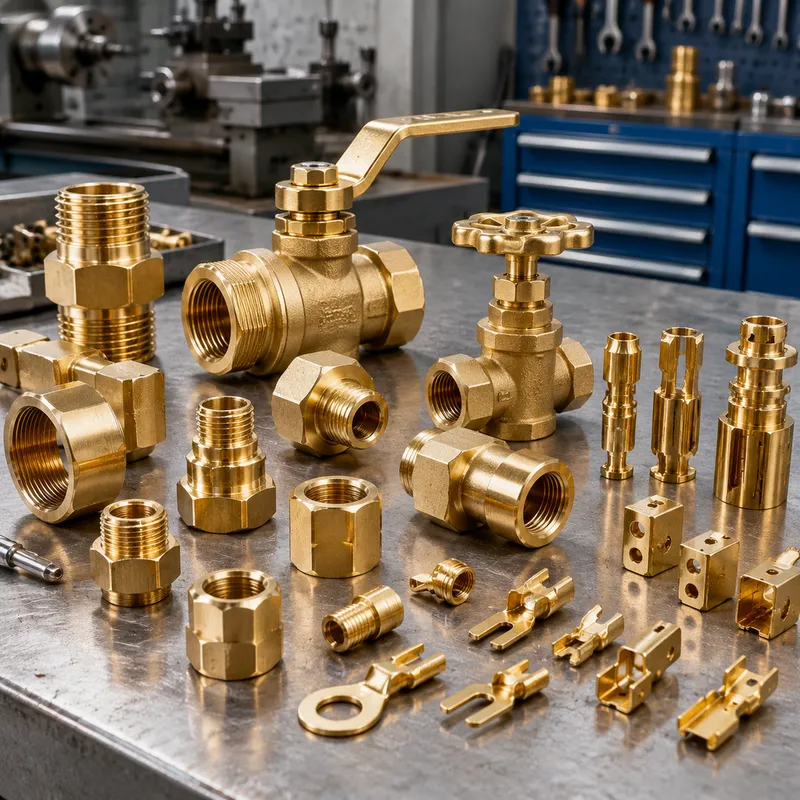
Brass CNC Machining
Brass machines faster than almost any metal alloy: free-cutting C360 (about 60% copper, over 30% zinc, under 3% lead) breaks chips cleanly and cuts with low tool force, while the higher-ductility C260 cartridge brass suits cold-formed features. Machined tolerance capability runs down to ±0.005 in (0.127 mm). Parts leave the machine functional as-machined; where appearance or corrosion resistance matters, polishing/buffing, nickel or chrome electroplating and honing for bearing seats are the standard finishing routes — plating a few microns thick must be budgeted into fit tolerances.
Product family
High Volume CNC Machining
High volume CNC machining covers production runs from 1,000 into the hundreds of thousands of parts, on dedicated or semi-dedicated equipment: horizontal machining centers, multi-spindle and Swiss-type lathes with bar feeders, and pallet-loaded 5-axis cells running lights-out. Well-controlled processes hold ±0.0005 in (±12.7 µm) across full runs, with critical features at ±0.0001 in (±2.5 µm). Material choice is driven by machinability at scale: 6061-T6 dominates milling, free-machining C360 brass and 303 stainless cut cycle time in turning.
Product family
Phenolic Machining
Phenolic machining covers the thermoset laminate family — paper, canvas and linen-reinforced phenolics, nylon-reinforced N-1, glass-reinforced G-3, silicone-resin G-7 and the glass-epoxy G-10/G-11 (Garolite) grades. The material machines dry without lubricants, stays dimensionally stable under heat and humidity, and holds insulative and dielectric properties that make it the classic choice for terminal boards, PCB laminates, gears, cams and high-wear insulative components. G-7 grades carry service to 428 °F (220 °C); fine-weave linen grades achieve close tolerances, while stronger glass-reinforced grades need carbide or diamond-tipped tooling at high spindle speed.
Product family
High Speed Machining
High speed machining pairs fast, light-cut toolpaths with tightly scoped design rules: minimum hole diameter 0.5 mm, minimum slot width 0.75 mm (1.25 mm and above unlocks deeper, faster cutting, to a 50 mm slot depth), and threads from M1.6 to M12 at a typical depth of Ø × 2.5. Stocked engineering plastics — ABS, acetal, nylon, PEEK, polycarbonate — machine without special ordering, and parts leave the machine deburred with optional bead-blast matte finishing, anodizing or laser engraving.
Product family
Automotive Machining
Automotive machining covers powertrain, chassis, EV and interior components across the prototype-to-production arc: quotes in minutes, CNC parts as fast as 1 day, tolerances as tight as ±0.0002 in. The material set spans automotive steels (4140, 4340, 4130, 1045, 1018), 6061-T6 and 6063 aluminum, 5052 sheet, titanium Grade 5, copper and engineering plastics. Automotive-grade quality frameworks — IATF 16949:2016 manufacturing with PPAP and APQP documentation — apply at production scale.
Product family
Robotics Machining
Robotics machining covers the joints, frames and motion interfaces of robot systems, where tolerance discipline follows function: precision interfaces like bearing seats and rail mounts run in the ±0.01–0.05 mm class, 5-axis work reaches ±0.0001 in (±2.5 µm) at the top end, and non-functional geometry takes general tolerances. 6061-T6 aluminum is the structural default, 7075-T6 the stiffness-to-weight upgrade, steel the high-wear answer — with quick-turn parts as fast as 2 days keeping robot programs iterating.
Product family
Electronics Machining
Electronics machining covers the precision-machined hardware around the board — aluminum housings, front panels, connector housings, shielding covers, thermal blocks, heat sinks and small brackets — quoted around ±0.001–0.002 in (±0.025–0.05 mm) for many features. Material follows function (aluminum for weight and machinability, copper for conduction, brass for conductive connector parts, plastics for isolation), and finishing-aware tolerancing matters because anodizing changes part dimensions at holes, slots, threads and sealing faces.
Product family
Heat Sink Machining
Heat sink machining produces the thermal hardware of electronics: pin fin heatsinks, liquid cold plates, heat spreaders, fan shrouds, vapor chamber bases and TEC mount plates in aluminum 6063 and copper C110. Interface flatness to ±0.001 in is the governing spec — flat thermal contact surfaces, with case-study contact faces at Ra 16 µin. Prototype runs quote market-typical at 5–10 business days, production 10–15.
Sheet Metal Parts
Product family
Sheet Metal Fabrication
Custom sheet metal fabrication service offering laser cutting, bending, tapping, countersinking, welding, and finishing across materials including aluminum, stainless steel, brass, and cold rolled/galvanized steel. Lead times range from as fast as 3 days for aluminum to 7 days for stainless steel.
Product family
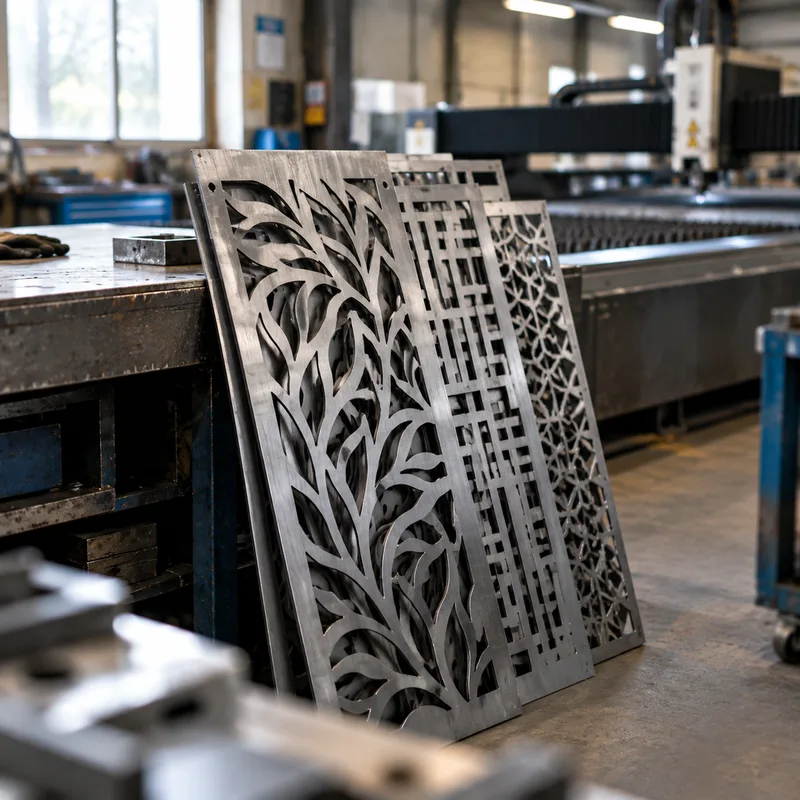
Laser Cutting
A precision sheet metal cutting process that uses a laser to turn flat material into finished part geometry, ideal for tight tolerances, small features, and fast production. It is the fastest, most precise option for metal up to .750″.
Product family
Metal Stamping
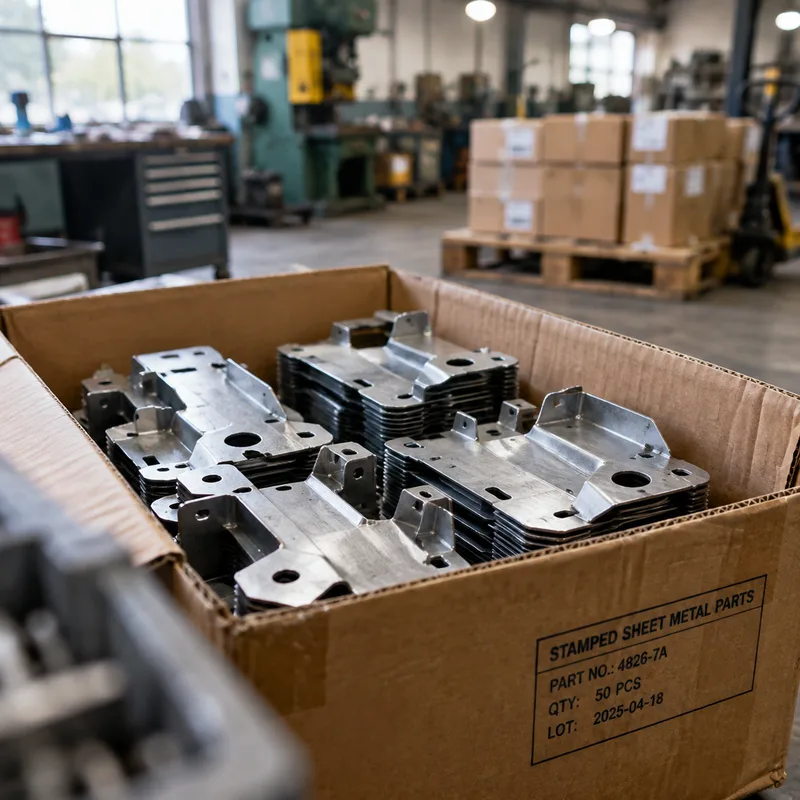
CNC punching/stamping service for sheet metal parts, offering louver, convex package, countersunk hole and rolling rib forming with ±0.1 punching accuracy on plates up to 6mm thick.
Product family
Sheet Metal Bending
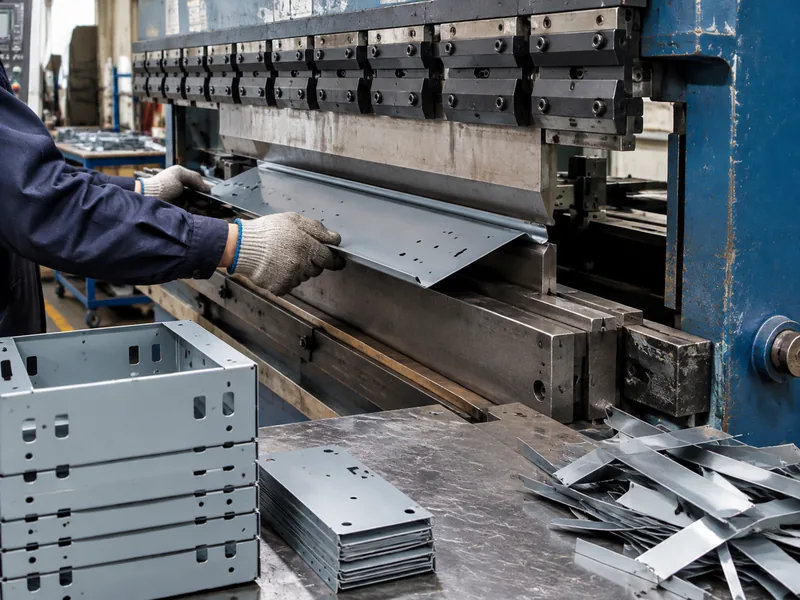
CNC press-brake bending folds laser-cut flat patterns into brackets, enclosures and formed parts without removing material. Setup tolerance is typically ±0.1 mm with CNC backgauging; sheet thickness up to 0.25 in (6.35 mm) and beyond is bent routinely in ductile alloys such as aluminum 5052, stainless steel, brass and mild steel. Bending suits low-to-medium volumes of roughly 1–5,000 parts, where brake tooling costs a fraction of stamping dies and changeover takes minutes rather than hours.
Product family
Laser Tube Cutting
Laser tube cutting rotates round, square and rectangular tube stock in a lathe-style chuck while a laser cuts holes, slots, notches and coped channels — features as small as the wall thickness — with no tooling and repeatable results. Most metal tube stock up to 6 in (152 mm) diameter is accepted. Standard stock includes stainless 304/316 (welded and seamless), aluminum 6061 (extruded and drawn), alloy steel 4130 (seamless) and A513 DOM/HREW/CREW carbon steel tube. The process is semi-to-fully automated with high throughput and low material waste; kerf is much thinner than traditional cutting, and some materials show a small heat-discoloration halo at the cut.
Product family
Weldment Services
Weldment services turn machined, cut and formed components into certified structural assemblies: TIG for clean cosmetic welds on thin and exotic metals, MIG for speed in general fabrication, FCAW and stick for heavy structural work, submerged arc for long low-distortion seams and spot welding for sheet joins. Dissimilar-metal joins are avoided by design — aluminum to aluminum, steel to steel. Inspection scales from standard visual checks through dimensional verification to dye penetrant, ultrasonic and radiographic testing, under AWS D1.1, ASME, AS9100, NADCAP and ISO 9001 frameworks.
Die Casting Parts
Product family
Die Casting
Custom aluminum and zinc die casting for complex metal parts with cost-effective tooling and rapid, scalable production. Offers tight tolerances, thin-wall capability, and a range of surface finishes.
Product family
Zinc Die Casting
Zinc die casting produces small, dense, high-precision components in the Zamak and ZA alloy families, with as-cast surface roughness of Ra 0.8–1.6 µm straight from the mold. General tolerances of ±0.05–0.10 mm are typical depending on geometry and die configuration; recommended wall thickness is 0.6–3.0 mm for Zamak 3/5 and 1.0–4.0 mm for ZA-8, with draft angles of at least 0.5° external and 1° internal. Most machines cap shot weight at 500–750 g, so large heavy parts belong to alternative casting routes — zinc earns its keep on small, intricate, high-volume components where tool life reaches 500,000 to over 1,000,000 shots.
3D Printing Parts
Product family
SLA 3D Printing
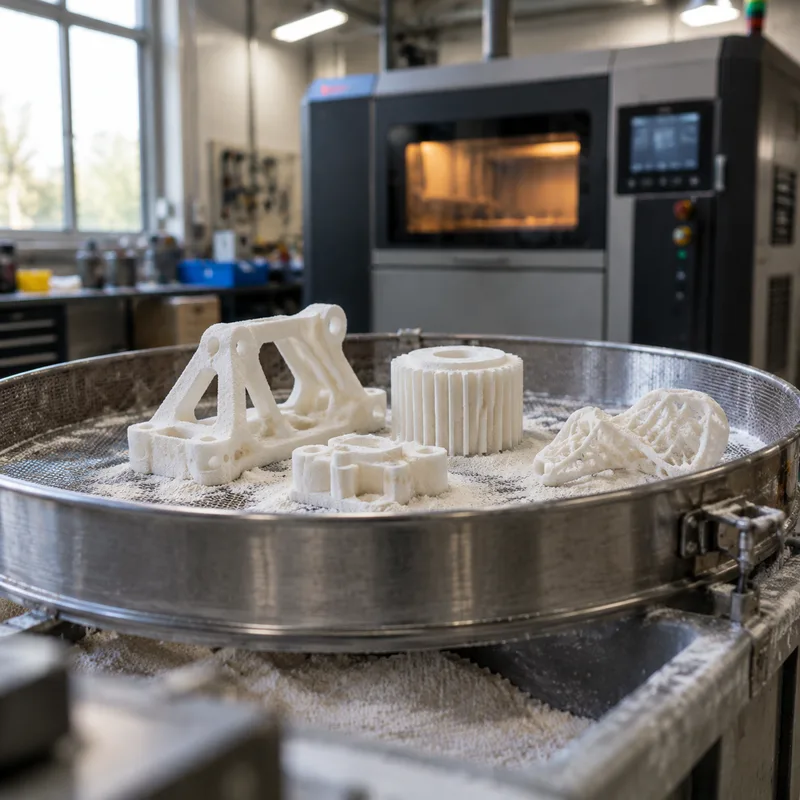
Stereolithography (SLA) resin 3D printing service using photopolymer resins such as Loctite 3843 and IND147 for tools, fixtures, molds, and functional parts.
Product family
SLS 3D Printing
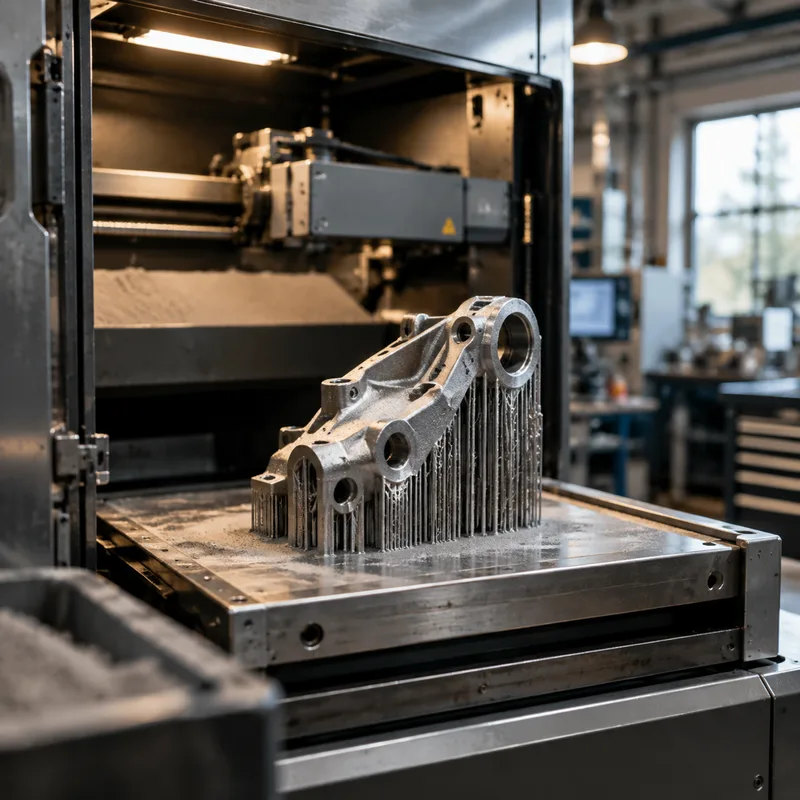
Selective Laser Sintering (SLS) 3D printing service offering nylon materials such as Nylon 11, Nylon 12, and Nylon 12 Glass-Filled for end-use parts and functional testing.
Product family
Metal 3D Printing (DMLS)
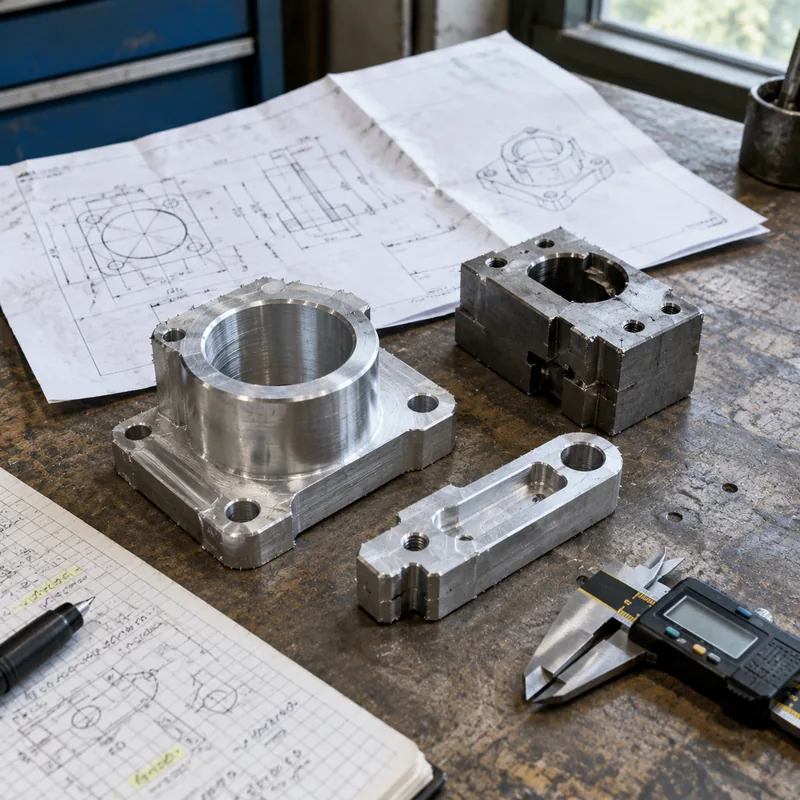
Direct Metal Laser Sintering (DMLS) 3D printing service for metal prototypes and production parts, using a laser to selectively fuse fine metallic powder layer by layer into fully dense parts. Offers instant quotes, free shipping on US orders, and ISO 9001:2015, ISO 13485, IATF 16949:2016, AS9100D certification with ITAR registration. Parts sinter to 98%+ density with as-printed surface roughness of 150-1000 uin Ra, with standard media-blast finishing and optional CNC machining or polishing post-processing.
Product family
Multi Jet Fusion (MJF)
Multi Jet Fusion 3D printing builds functional nylon parts layer by layer with a 0.08 mm resolution, bridging prototyping and production runs of 10–1,000 units. Build envelopes reach 380 x 284 x 380 mm (15 x 11.2 x 15 in); tolerance is ±(0.3 mm + 0.002 mm/mm) with a 1 mm minimum wall for consistent mechanical properties and 0.2 mm minimum gaps between mating parts (0.3 mm recommended). Lead time is as fast as 3 days in PA 12, glass-bead-filled PA 12 or polypropylene.
Product family
FDM 3D Printing
FDM 3D printing builds functional thermoplastic parts layer by layer from extruded filament — the affordable route for jigs, fixtures, enclosures and end-use components. Prototyping FDM reaches a 500 × 500 × 500 mm build volume at ±0.5% dimensional accuracy (minimum 0.5 mm); Industrial FDM trades envelope (406 × 355 × 406 mm) for tighter ±0.3% accuracy and production-grade materials. Walls bottom out at 0.8 mm, features and holes at 2.0 mm, with layer heights from 100–300 µm.
Urethane Casting Parts
Material grades
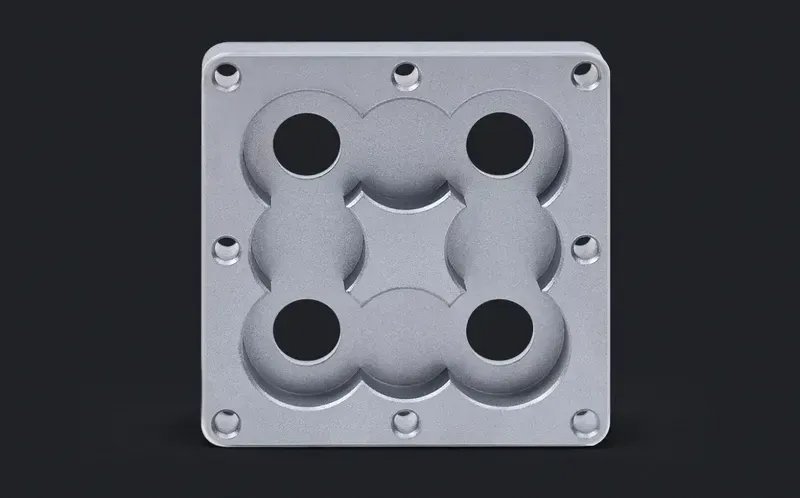
304 Stainless Steel CNC Machining
CNC machining of 304 stainless steel: collected property envelope with heat-treatment condition, corrosion-service selection points, and what to send for a quotation.
316 / 316L Stainless Steel CNC Machining
CNC machining of 316 and 316L stainless steel: collected property envelope with heat-treatment condition, marine and chemical-service selection points, and quotation inputs.
17-4 PH Stainless Steel CNC Machining
CNC machining of 17-4 PH precipitation-hardening stainless steel: collected property envelope with the H900 condition, strength-driven selection points, and quotation inputs.
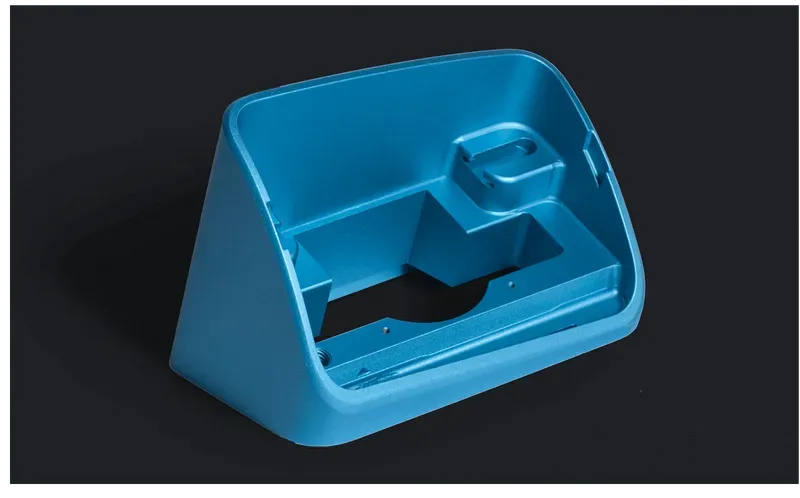
6061 Aluminum CNC Machining
CNC machining of aluminum: collected property envelope with temper condition, structural and enclosure selection points, and what to send for a quotation.
7075 Aluminum CNC Machining
CNC machining of the high-strength aerospace aluminum: collected property envelope with temper condition, load-path selection points, and quotation inputs.
5052 Aluminum CNC Machining
CNC machining and fabrication of the forming-and-welding aluminum: collected property envelope with temper condition, sheet-metal selection points, and quotation inputs.
Copper (T2) CNC Machining
CNC machining of high-conductivity copper: collected property envelope, electrical and thermal application selection points, and quotation inputs.
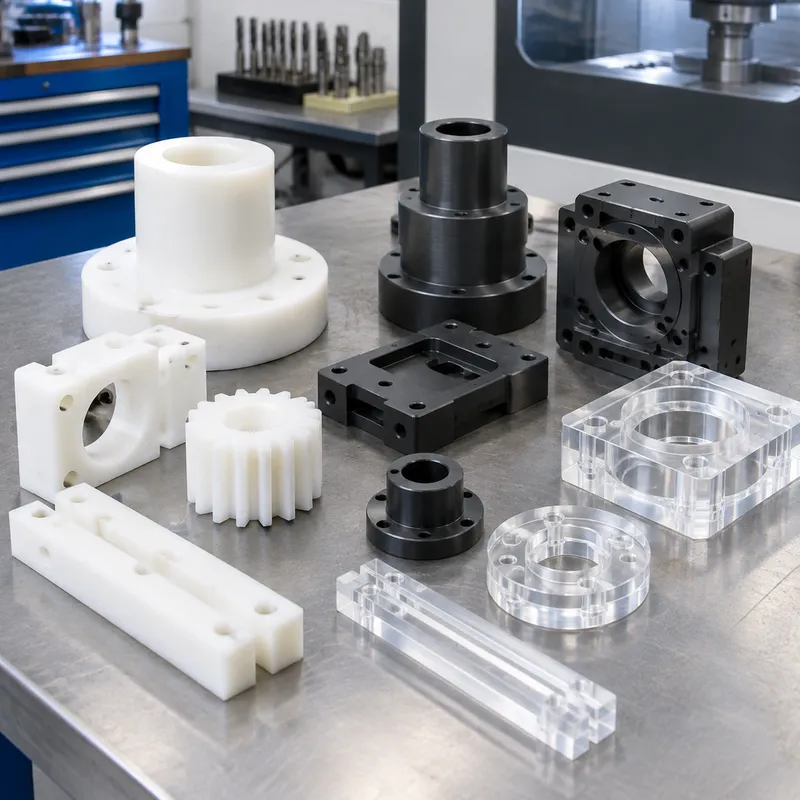
ABS CNC Machining
CNC machining of ABS: collected property evidence with processing window, prototyping and housing selection points, and quotation inputs.
POM (Acetal / Delrin-type) CNC Machining
CNC machining of POM: collected property envelope with service conditions, precision-mechanism selection points, and quotation inputs.
PMMA (Acrylic) CNC Machining
CNC machining of PMMA acrylic: collected property envelope with service conditions, optical and cosmetic selection points, and quotation inputs.
Polycarbonate (PC) CNC Machining
CNC machining of polycarbonate: collected property envelope with service conditions, impact and temperature selection points, and quotation inputs.
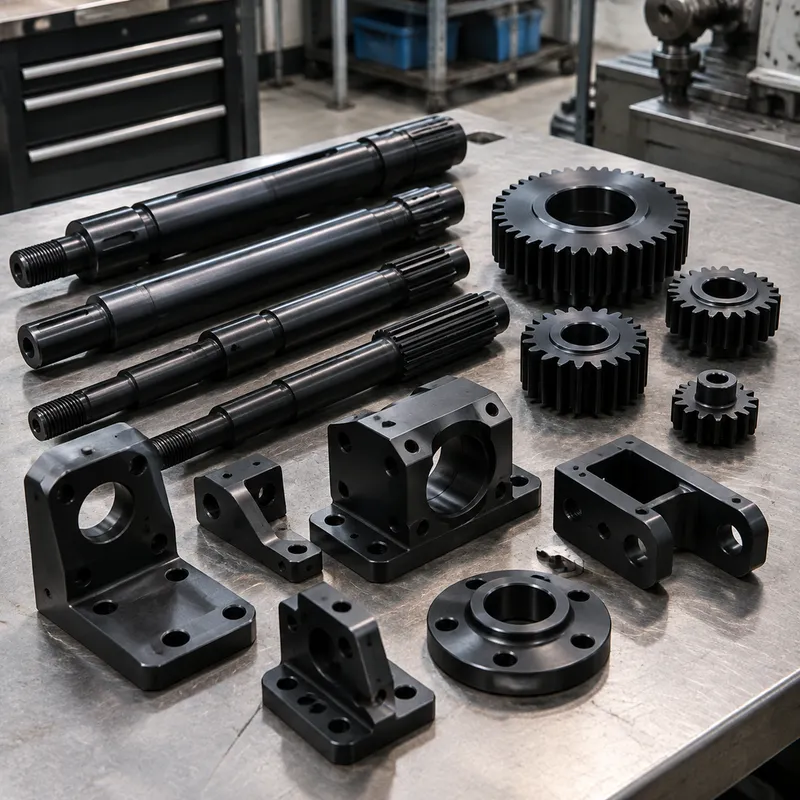
45# Carbon Steel CNC Machining
CNC machining of grade steel with the collected heat-treatment envelope: delivery hardness, quenched and tempered states, and what to state on the drawing so the right condition is quoted.
Stainless Steel 201 CNC Machining
CNC machining of stainless steel: collected property table for the economical austenitic grade, where the substitution risk sits, and what to confirm before quoting.
SUS304 CNC Machining (JIS Designation)
CNC machining of the JIS-designated austenitic stainless: the collected property band across annealed and cold-worked states, cryogenic service behavior, and how the designation maps in procurement.
Cold Rolled Steel CNC Machining
CNC machining of cold rolled steel: the collected mechanical band, the surface-quality and dimensional-accuracy reasons to pick CRS stock, and the corrosion caveat to plan around.
FR4 CNC Machining
CNC machining of FR4 epoxy glass laminate: the collected electrical, mechanical and flammability envelope, where it beats engineering plastics, and how to fixture the abrasive glass weave.
Nylon (PA6) CNC Machining
CNC machining of nylon: the collected shrinkage and moisture-management facts, why PA6 behaves differently from its sibling grade, and what to state on the RFQ so tolerance survives humidity.
PEEK CNC Machining
Machining PEEK: the collected grade-property envelope (unfilled through carbon-filled), why annealing decides tolerance, and what to state on the RFQ.
Tube Bending Services
Custom round-tube bending: collected size envelope and tolerance standards for drawn and mandrel bending, process selection, and what to send for a quotation.
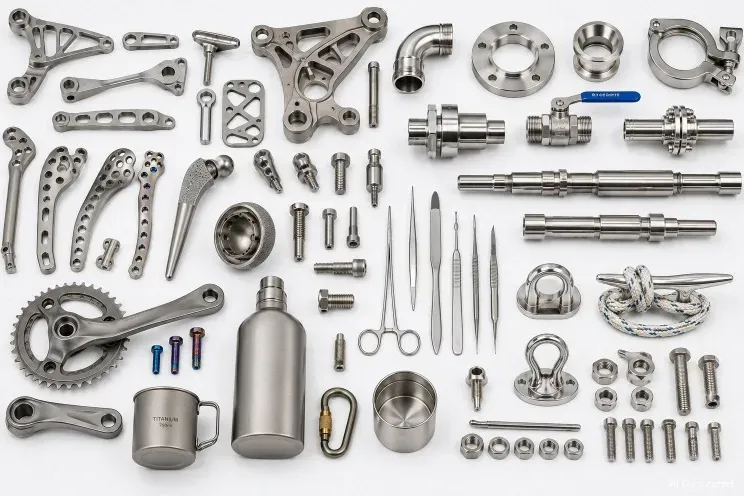
Titanium (Ti-6Al-4V) CNC Machining
Machining titanium Ti-6Al-4V: the collected strength-to-weight envelope, the stiffness caveat, the temperature and wear boundaries, and what to state on the RFQ.
MDF Laser Cutting
Laser cutting MDF: the collected thickness-versus-power envelope, cut-quality and edge characteristics, design guidance, and what to send for a quotation.
Aluminum Die Casting
Aluminum die casting: the collected alloy and property envelope (A380/A360), what the process buys over machining, and how to prepare a casting RFQ.
Magnesium CNC Machining
Machining magnesium (AZ91D): the collected property envelope, the chip-fire safety reality, corrosion management, and what to state on the RFQ.
C260 Brass CNC Machining
Machining C260 cartridge brass: the collected property envelope and temper dependence, where it beats free-cutting brass, and what to state on the RFQ.
C360 Brass CNC Machining
Machining C360 free-cutting brass: the collected property envelope, the cutting-parameter bands that make it the machinability benchmark, and what to send for a quotation.
4140 Alloy Steel CNC Machining
Machining 4140 chromoly steel: the collected composition and property envelope, how heat treatment moves its properties, and where 4130 is the better fabrication choice.
Mild Steel CNC Machining
Machining mild steel: the collected grade envelope for 1018, 1020 and A36, how the grades differ on paper and in the cut, and what to send for a quotation.
4130 Alloy Steel CNC Machining
Machining 4130 chromoly steel: the collected composition and property envelope, its tube-and-sheet sourcing profile, and why weld-heavy fabrications pick it over 4140.
Sheet Metal Hemming Services
Sheet metal hemming: the collected design rules for flange length, thickness window, hem types and tolerances, plus when a hem beats deburring or edge rolling.
Swiss Machining Services
Swiss-type turning for small, slender precision parts: diameters inside the guide-bushing envelope, production tolerances in the two-ten-thousandths band, guide-bushing support for parts conventional lathes deflect.
Silicone & Elastomer 3D Printing (PolyJet)
Silicone and digital-elastomer 3D printing: Shore A elastomer grades plus rigid, high-resolution layers, multi-hardness overmolding prototypes in a single build.
Aluminum Anodizing Services (Type II / Type III)
Aluminum anodizing to MIL-A-8625: Type II cosmetic coats and Type III hardcoat, thickness windows, dimensional growth rules, salt-spray and dielectric performance, alloy selection.
Phenolic CNC Machining
CNC machining of phenolic laminate (paper, linen and glass grades, including Bakelite): where the thermoset earns its place, how it cuts, and what to specify at quotation.
H59 Brass CNC Machining
CNC machining of H59 brass, the two-phase Cu-Zn workhorse: plate mechanical properties, hot-working behavior, and where it sits against C260 and C360 free-cutting grades.
PTFE (Teflon) CNC Machining
CNC machining of PTFE (Teflon): chemical inertness and temperature envelope, why the material moves under load and with temperature, and how to specify tolerances that the polymer can actually hold.
303 Stainless Steel CNC Machining
CNC machining of 303 stainless steel: why the sulfur addition buys free machining, where the corrosion and weldability boundaries sit against 304 and 316, and what to send for a quotation.
2024 Aluminum CNC Machining
CNC machining of 2024 aluminum: the fatigue-critical aerospace alloy — strength and temper behavior, why corrosion protection is part of the specification, and what to send for a quotation.
6063 Aluminum CNC Machining
CNC machining of 6063 aluminum: the architectural extrusion alloy — anodized-finish behavior, T5 versus T6 temper selection, moderate-strength boundaries, and what to send for a quotation.
PA66 (Nylon 66) CNC Machining
CNC machining of PA66 nylon: moisture, conditioning and tolerance behavior, where the higher heat and stiffness of the polymer earn its specification over PA6, and what to send for a quotation.
G10 CNC Machining
CNC machining of G10 glass-epoxy laminate: electrical and mechanical insulation applications, how the glass reinforcement shapes tooling and tolerances, and the G10-versus-FR4 specification question.
6082 Aluminum CNC Machining
CNC machining of 6082 aluminum: the European structural alternative to 6061-T6, with collected property envelope, temper notes, and what to send for a quotation.
5083 Aluminum CNC Machining
CNC machining of 5083 aluminum: the marine-grade, weldable 5xxx alloy, with collected property envelope, temper notes, and what to send for a quotation.
2011 Aluminum CNC Machining
CNC machining of 2011 aluminum: the free-machining screw-stock alloy, with collected property envelope, lead-content tradeoffs, and what to send for a quotation.
7050 Aluminum CNC Machining
CNC machining of 7050 aluminum: the stress-corrosion-resistant aerospace plate alloy, with collected property envelope, temper notes, and what to send for a quotation.
1215 Steel CNC Machining
CNC machining of 1215 steel: the lead-free free-machining carbon steel for screw-machine work, with collected property envelope and its welding and corrosion limits.
4340 Alloy Steel CNC Machining
CNC machining of 4340 alloy steel: the nickel-chromium-molybdenum grade for ultra-high-strength parts, with heat-treatment-conditioned properties and process notes.
440C Stainless Steel CNC Machining
CNC machining of 440C stainless steel: the high-carbon martensitic grade for hardened, wear-resistant parts, with collected property envelope and process limits.
Titanium Grade 2 CNC Machining
CNC machining of Grade 2 commercially pure titanium: corrosion-first titanium with collected property envelope, machining behavior, and its boundary against Ti-6Al-4V.
C17200 Beryllium Copper CNC Machining
CNC machining of C17200 beryllium copper: the strength-plus-conductivity copper alloy, its temper-dependent property envelope, machining behavior, and where it earns its premium.
PPS CNC Machining
CNC machining of PPS (polyphenylene sulfide): the high-temperature engineering thermoplastic, its chemical and thermal envelope, machining behavior, and where it beats metal or other plastics.
Zamak 5 Zinc Die Casting
Zamak 5 (ZAl4Cu1) zinc die casting: the higher-strength zamak, its property envelope, when to pick it over Zamak 3, and how its cast parts coexist with CNC-machined work.
ADC12 Aluminum Die Casting
ADC12 aluminum die casting: the Japanese-standard high-silicon casting alloy, its property envelope, machining and finishing behavior, and where it sits against CNC-machined aluminum.
1045 Carbon Steel CNC Machining
CNC machining of 1045 medium-carbon steel: collected property envelope with heat-treatment condition, where it sits between 1018 and 4140, and what to send for a quotation.
8620 Alloy Steel CNC Machining
CNC machining of 8620 case-hardening alloy steel: collected property envelope, why the grade is specified for carburized gears and pins, and the machining sequence that keeps tolerance through the case treatment.
12L14 Free-Machining Steel CNC Machining
CNC machining of 12L14 leaded free-machining steel: the machinability benchmark, where its strength ceiling sits, the lead-content boundary conditions, and what to send for a quotation.
D2 Tool Steel CNC Machining
CNC machining of D2 air-hardening cold-work tool steel: the wear-resistance recipe, what annealed-state machining buys before hardening, and the grinding-dependent finish reality after heat treatment.
Zamak 3 Zinc Die Casting
Zamak 3 zinc die casting: the general-purpose zamak, its as-cast property envelope, where the ductility premium over Zamak 5 pays, and how machined features meet cast geometry.
C11000 Copper (ETP) CNC Machining
CNC machining of C11000 electrolytic tough-pitch copper: the conductivity benchmark, the gummy-cutting reality and how shops machine it, and where brass or bronze alloys are the better call.
Phosphor Bronze CNC Machining
CNC machining of phosphor bronze (C51000/C54400 class): the tin-bronze spring and bearing alloy, how temper changes its properties, and where it beats brass and pure copper on duty.
Gray Cast Iron CNC Machining
Machining gray cast iron (HT250 / GG25 class): the graphite-damped vibration absorber, how class numbers map to strength, the chip and dust discipline of machining it, and what to send for a quotation.
PEI (Ultem) CNC Machining
CNC machining of PEI (Ultem): an amorphous high-temperature plastic with a collected property envelope covering thermal headroom, strength and moisture behavior, plus selection and quotation guidance.
Inconel 718 CNC Machining
CNC machining of Inconel 718: the age-hardened nickel superalloy behind aerospace and energy hardware — collected property envelope, machining behavior, and how to quote it.
Monel 400 CNC Machining
CNC machining of Monel 400: the nickel-copper alloy for seawater, HF and alkaline service — collected property envelope, machining behavior, and what to put on the RFQ.
Hastelloy C-276 CNC Machining
CNC machining of Hastelloy C-276: the nickel-molybdenum-chromium alloy for the worst mixed chemical streams — collected property envelope, machining behavior, and RFQ guidance.
M2 Tool Steel CNC Machining
CNC machining of M2 tool steel: the general-purpose high-speed steel — machining it in the annealed state, heat treatment, grinding practice, and what to put on the RFQ.
904L Stainless Steel CNC Machining
CNC machining of 904L: the super austenitic stainless behind sulfuric acid service and premium seawater hardware — collected property envelope, machining behavior, RFQ guidance.
2205 Duplex Stainless Steel CNC Machining
CNC machining of 2205 duplex stainless: roughly double the yield of 316 with serious chloride resistance — collected property envelope, machining behavior, RFQ guidance.
Nitronic 60 CNC Machining
CNC machining of Nitronic 60 (UNS S21800): the galling-resistant austenitic stainless for wear and seizure service — collected property envelope, machining behavior, RFQ guidance.
HDPE CNC Machining
CNC machining of HDPE: the chemically inert commodity plastic for tanks, liners and wear parts — collected property envelope, cutting behavior, and RFQ guidance.
Rigid PVC CNC Machining
CNC machining of rigid PVC: the chemically resistant, self-extinguishing commodity plastic for tanks, valves and ducting — collected property envelope, cutting behavior, RFQ guidance.
PP (Polypropylene) CNC Machining
CNC machining of polypropylene: the light, chemically tough, living-hinge commodity plastic — collected property envelope, cutting behavior, and RFQ guidance.
Molybdenum CNC Machining
CNC machining of molybdenum: the refractory metal behind furnace hardware, glass tooling and sputtering targets — machining behavior, oxidation limits, and RFQ guidance.
Tungsten CNC Machining
CNC machining of tungsten: the densest practical metal with the highest melting point of any metal — machining reality, oxidation limits, radiation shielding, and RFQ guidance.
UHMW-PE CNC Machining
CNC machining of UHMW-PE: the highest-impact, lowest-friction polyethylene for wear strips, chute liners and guides — machining behavior, tolerance reality, RFQ guidance.
See the manufacturing services behind these part categories →